
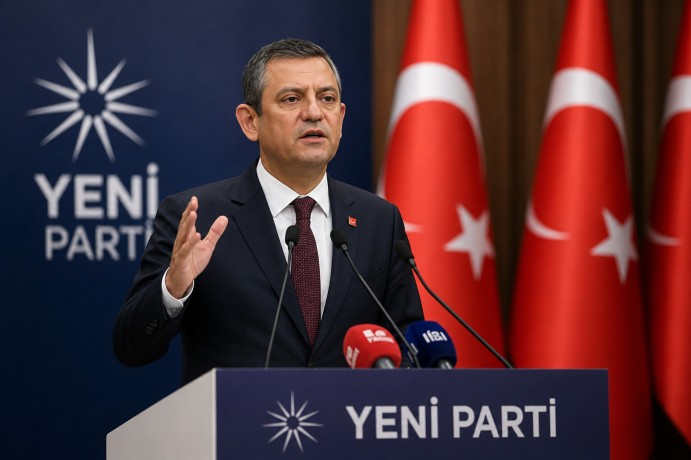
Türkiye’s political dynamics have experienced a significant transformation as 91 lawmakers, led by former Republican People’s Party (CHP) leader Özgür Özel, departed from the CHP to form a new political entity known as the New Party (Yeni Parti). This large-scale resignation marks the most substantial division in the CHP’s recent history, dramatically altering the power distribution within the Turkish Parliament. The New Party, with its 91 members, emerges as the largest opposition faction, reducing the CHP’s parliamentary presence from 135 seats to just 44, thereby relinquishing its role as the country’s main opposition party.
Özel formalized the establishment of the New Party on Friday by signing its founding documents, which were subsequently submitted to the Interior Ministry for official registration. The 91 former CHP legislators are now part of the party’s founding board. In a press briefing held in Ankara, Özel confirmed that the party had completed its legal registration and is set to immediately commence the formation of its leadership structure. The founding board plans to gather at the historic Anadolu Club, initiated under the guidance of Mustafa Kemal Atatürk, to elect the party chairperson and other governing bodies.
Özel expressed that the New Party would engage in the forthcoming parliamentary budget discussions as the primary opposition “for the first and last time,” voicing optimism that the movement is poised to establish a future government prioritizing economic prosperity and political stability. This parliamentary shift is anticipated to reorganize seating arrangements in the General Assembly and expand the number of parliamentary groups from six to seven.
The schism comes after months of internal discord within the CHP, following Kemal Kılıçdaroğlu’s return to party leadership due to a court ruling that annulled the previous party congress. CHP spokesperson Müslim Sarı questioned the rationale behind forming a new party, noting that Özel had committed to adhering to the same political ideologies as the CHP. Sarı challenged the necessity of a new party if the political path remains unchanged, suggesting that the move might be more about political maneuvering than actual policy disagreements.
The advent of the New Party is anticipated to redefine opposition politics in Türkiye, setting the stage for future legislative discussions and elections. As the political landscape evolves, the emergence of this new political force could have lasting implications for the country’s governance and political strategies.