
Sheila A. Smith, author of “Intimate Rivals,” a comprehensive study of Japan-China relations, has provided insights into why the current diplomatic crisis over Taiwan presents particularly challenging de-escalation dynamics. According to Smith, the fundamental issue is that leaders in both countries face domestic political pressures that prevent them from appearing to back down, creating a diplomatic deadlock where neither side can easily compromise without facing internal political costs.
This domestic political dimension distinguishes the current crisis from purely economic or territorial disagreements that might be resolved through negotiation or third-party mediation. Prime Minister Sanae Takaichi’s statements about potential Japanese military involvement if China takes armed action against Taiwan have resonated with security-conscious constituencies in Japan who view Chinese military expansion with concern. Retracting such statements could undermine her political standing and credibility.
Similarly, from Beijing’s perspective, Taiwan represents a core national interest where any perceived weakness or compromise is politically unacceptable. Chinese foreign ministry spokeswoman Mao Ning has made clear that China’s position remains firm, demanding that Japan retract what Beijing terms “erroneous remarks” and explicitly reaffirm commitment to the “One China” principle. This demand reflects not just diplomatic preference but fundamental Chinese policy on an issue viewed as non-negotiable.
Historical precedents offer limited grounds for optimism regarding quick resolution. Smith notes that in past disputes with other countries, tensions have often subsided only after leadership changes, as new leaders are not personally associated with previous controversial statements and can adopt fresh approaches without appearing to reverse course. This pattern suggests the current crisis may persist as long as the current leaders remain in office, potentially years rather than months.
The economic costs of this prolonged diplomatic standoff are already mounting. Economist Takahide Kiuchi projects losses of approximately $11.5 billion from reduced tourism alone, with China having been on track to reclaim its position as Japan’s largest source of international visitors. Beyond tourism, cultural exchanges are being disrupted, commercial relationships strained, and there are concerns about potential restrictions on strategically important trade in rare earth minerals and continued enforcement of seafood import bans. Small businesses throughout Japan are experiencing immediate impacts, with traditional cultural experiences seeing mass cancellations extending months into the future as the diplomatic crisis shows no signs of early resolution.
Intimate Rivals Author Explains Why Japan-China Taiwan Dispute Defies Easy Resolution
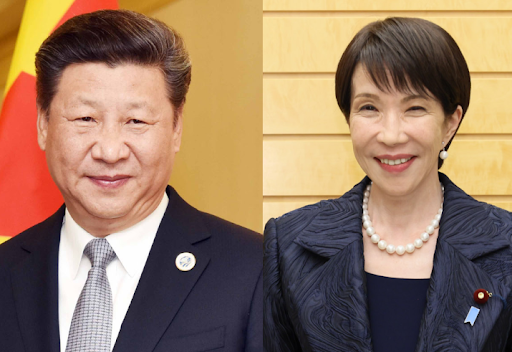
Picture credit: www.commons.wikimedia.org
34