
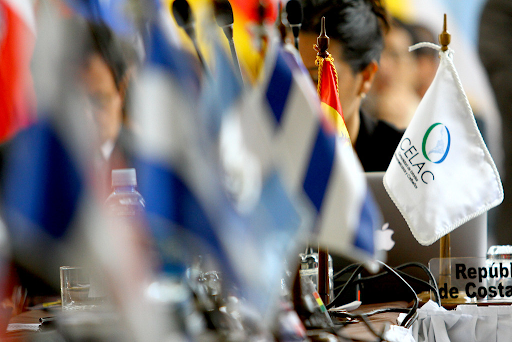
There are effectively two different summits unfolding in Santa Marta, Colombia. The first is the official one: a meeting between the Community of Latin American and Caribbean States (CELAC) and the European Union, designed to produce the “Declaration of Santa Marta.” This formal agenda is focused on optimistic, long-term goals like cooperation on renewable energy, financing for sustainable projects, technological partnerships, and regional food security.
The second, unofficial summit is the one dominating the headlines and private conversations. This is a crisis meeting driven by explosive regional security issues, primarily a deadly US military operation that has killed over 60 people in the Caribbean and Pacific. This operation has drawn the personal fury of the host, Colombian President Gustavo Petro, who calls the deaths “extrajudicial executions” and has confirmed Colombian casualties.
This “real” summit has all but hijacked the official one. The host’s public condemnation has set a confrontational tone, ensuring the US operation will be the main topic. This agenda clash is exacerbated by a crisis of attendance. The absence of top EU leaders like Ursula von der Leyen and German Chancellor Friedrich Merz has weakened the summit’s diplomatic authority, making it harder for organizers to steer the conversation back to the planned topics of energy and tech.
The arrival of Brazil’s President Lula further cements the dominance of the unofficial summit. His delegation has explicitly stated he is attending to show “regional solidarity with Venezuela,” a country also facing military threats from US President Donald Trump. A Brazilian ambassador noted that discussing these US actions would be a “natural topic,” confirming that the focus will be on security, not agriculture.
As a result, the hopeful “Declaration of Santa Marta” is being completely overshadowed. The pressing, real-world crisis of military actions and regional sovereignty has proven far more urgent to the leaders in attendance than the formal, pre-planned discussions on economic and environmental cooperation.
A Tale of Two Summits: Official Agenda Clashes with Real-World Crisis
Picture Credit: www.flickr.com
36